
OnlyFans pricing changes more often than most subscribers expect, and ranking sites that list creator prices have to keep up or lose credibility. A ranking card that shows $9.99 when the checkout page now asks $14.99 does real damage: the subscriber feels misled, the site looks careless, and the whole comparison exercise loses value. This article breaks down how reputable directories, including BestOnlyFans, build verification layers and update routines that keep listings as accurate as the platform allows.
The core problem is structural. OnlyFans gives creators full control over their subscription price within a fixed band, and there is no public price-change feed that third parties can subscribe to. Ranking sites therefore work with observation, timestamps, and cross-checking rather than guaranteed real-time data. Understanding that limitation is the first step toward reading any ranking card correctly.

Why Creator Price Volatility Hurts Subscriber Trust
The paid subscription range on OnlyFans runs from $4.99 at the minimum to $49.99 at the maximum, but most active pages sit far below the ceiling. Typical paid pricing clusters between $4.99 and $15, with averages landing around $5 to $10. That narrow band sounds stable until you account for how frequently individual creators move within it.

A creator can run a $3 promotional first month, then return to a $9.99 base. They can convert a free page to paid, bundle content into a higher tier, or adjust pricing for a specific region. Every one of those moves invalidates whatever a directory recorded last week.
- Promotional periods ending: a listing still shows the $3 intro rate after the promotion expires and the base price returns to $9.99.
- Mid-cycle raises: the creator increases the price while existing subscribers keep access until their paid period ends, so two visitors see two different numbers on the same day.
- Bundle transitions: separate subscriptions merge into a single bundled tier, leaving older listings pointing at products that no longer exist.
- Free-to-paid conversions: a page listed at $0 starts charging, and every directory that cached the free status is now wrong.
- Regional pricing adjustments: the same creator charges differently depending on the subscriber’s currency, so a single listed figure cannot be correct everywhere.
Each scenario produces the same outcome: someone subscribes against outdated information and feels cheated by a site that did nothing more than record what it saw at the time.
The Verification Pipeline Behind BestOnlyFans Listings
Directories that take accuracy seriously do not publish a price the moment they scrape it. They run it through a layered pipeline designed to catch contradictions before a subscriber ever sees the card. BestOnlyFans structures that pipeline as a repeatable sequence rather than a one-time check.

- Automated price scraping: scheduled collection of the publicly visible price from the creator’s page, logged with the exact time of capture.
- Periodic creator page audits: a slower human or semi-automated pass that confirms the scraped figure matches what a real visitor sees.
- User-submitted discrepancy flags: a channel for subscribers to report a mismatch, which feeds directly into the review queue.
- Manual review queue: flagged entries are checked by a person before any change is published or rejected.
- Timestamp archiving: every confirmed price keeps its verification date, so the listing can show how fresh the data actually is.
- Confidence scoring: entries with recent multi-source confirmation display differently from entries resting on a single old capture.
A page can render a promotional banner instead of the base price, or hide the figure behind a login prompt. Audits and user flags correct those failure modes before they reach the public card.
Update Frequency Thresholds Across the Industry
Not every ranking site refreshes at the same speed, and the gap between refresh cycles is where subscriber risk accumulates. The table below compares common operating models and what their delay window means in practice.
| Site Type | Typical Refresh Cycle | Subscriber Risk Level |
|---|---|---|
| Automated large platform | Daily to every few days | Low to moderate |
| Manual curation site | Weekly to biweekly | Moderate |
| Community-driven directory | Irregular, driven by reports | Moderate to high |
| Creator self-reporting system | Only when the creator submits | High |
| Social media scraping tool | Whenever the source posts | High and unpredictable |
A weekly refresh cycle sounds reasonable until you remember that a promotional rate can expire in three days. The risk level in the right column reflects how far a listing can drift before anyone corrects it.
Self-reporting systems deserve particular caution. When the only update trigger is the creator’s own submission, a price change that the creator forgets to report stays invisible indefinitely.
Red Flags That Signal Stale Ranking Data
The indicators below are visible on the card itself and require no special tools.
- Missing recent timestamps: a card with no verification date, or one dated months ago, carries no freshness guarantee.
- Prices ending in unusual decimals: figures that do not match the platform’s normal pricing pattern often come from an old promotional capture.
- Absence of promotional labels: a very low price with no “intro offer” marker commonly means the promotion has already ended.
- Mismatch with typical niche pricing: a listing far below the $4.99 minimum, or wildly outside the $5-$10 cluster, is suspect.
- Outdated activity metrics on the same card: if the post count and last-activity date look frozen, the price likely is too.

Tip: treat any listing without a visible verification date as a rough estimate, not a confirmed price. If the card does not tell you when it was last checked, assume it could be weeks old.
They simply tell you how much independent confirmation the figure deserves before you rely on it.
Cross-Reference Methods Before You Subscribe
Independent validation takes a few minutes and eliminates most billing surprises. Five actions cover the practical ground.
- Check the creator’s direct social media links: pinned posts and bio links usually state the current price during a promotion.
- Compare across two or more ranking sites: agreement between independent directories raises confidence; disagreement flags an entry to verify manually.
- Look for recent subscriber comments mentioning pricing: fresh comments often confirm what people actually paid this week.
- Examine the creator’s own promotional posts: the clearest source for whether a discount is active and when it ends.
- Use the $0.10 card hold as a final confirmation step: the verification hold shows on your statement, is refunded within days, and confirms the payment path works before real charges apply.
Recurring billing behavior also matters here. When a creator raises the price, auto-renew stops, and existing access lasts only until the paid period ends. That means the number you see at checkout is the number you pay for the current cycle, not a locked-in rate.
Chargeback rules and card protections are worth reading once, since they shape what you can recover later.
If you want a broader view of which pages consistently rank well across independent trackers, comparing entries against resources like the best onlyfans streamer lists can show how different directories frame the same creator before you commit.
When Price Mismatches Trigger Refund Scenarios
Subscribing against a stale listed price rarely produces a clean refund, because the checkout page is treated as the authoritative figure.

- Auto-renew stopped due to price hikes: access simply lapses at the end of the paid period, and nothing was overcharged.
- Promotional rates expiring unexpectedly: the discount was real when it was recorded, so the later full price is not an error.
- Bundle pricing not honored: the old standalone tier no longer exists, so the difference cannot be refunded as a listed price.
- PPV message cost discrepancies: individually unlocked content is priced by the creator at the moment of purchase, up to $50 per message.
- Wallet credit confusion: credit added in expectation of a lower price stays as credit rather than returning to your card.
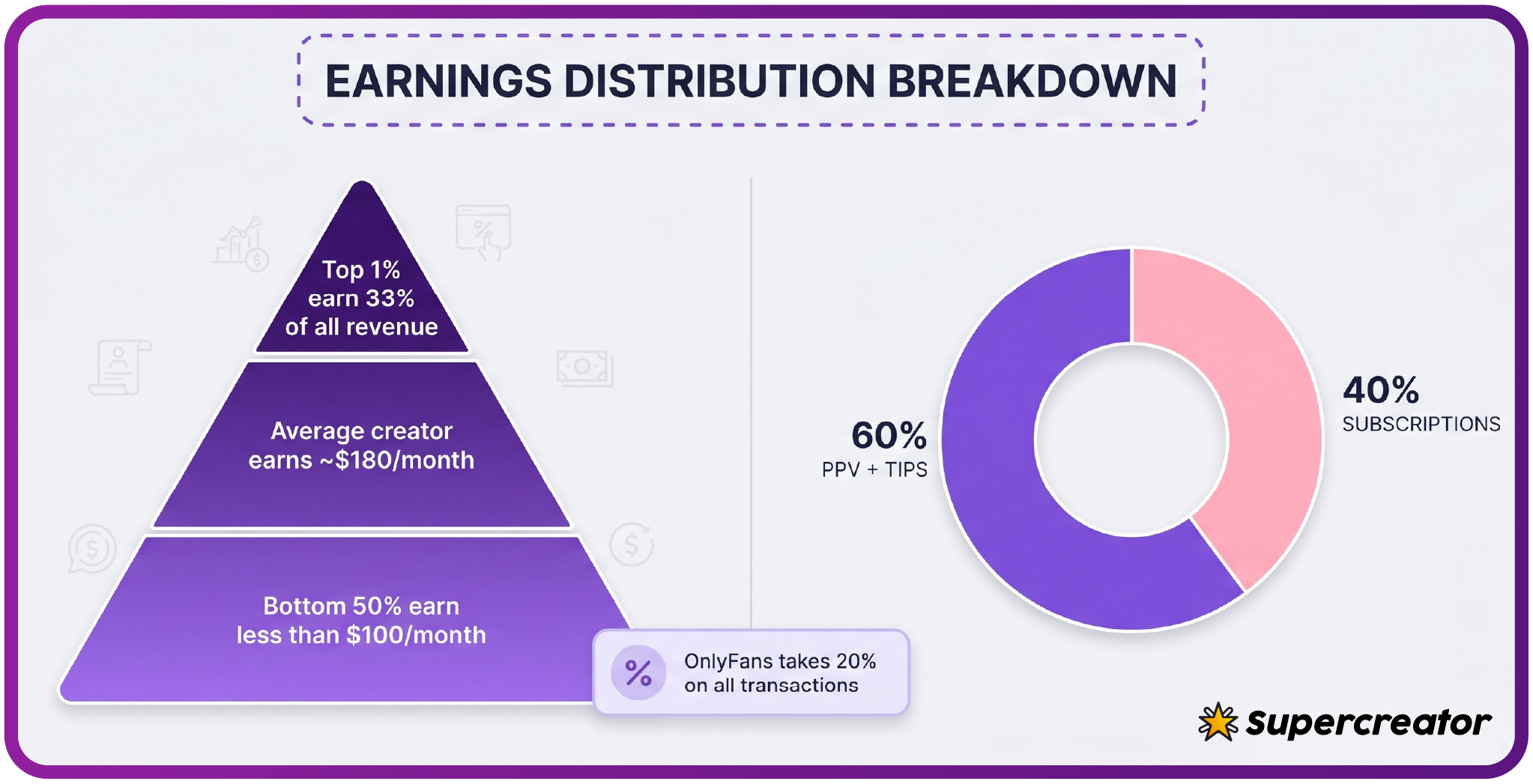
Paid chat messages commonly run $3 to $5 each, and tips can reach $100, so small assumptions about pricing compound quickly. The platform fee of 20% is also deducted from creator earnings, not added to your total, which is why the checkout figure can differ from what a listing implied.
Being able to recognize phishing scams matters in this context too, since fake “price correction” messages asking for card details are a recurring tactic around subscription services.
The Future of Real-Time Pricing in Creator Rankings
Price decay is an information problem, and several technical approaches could shrink the gap between a creator’s change and a listing’s update.
| Technical Approach | Implementation Barrier | Subscriber Benefit |
|---|---|---|
| Direct API partnerships | Requires platform cooperation and access agreements | Near-real-time accuracy with verified timestamps |
| Browser extension crowd-sourcing | Needs a large installed user base to be useful | Frequent real observations from actual checkout pages |
| Blockchain-anchored price commitments | Complex to operate and hard to explain to casual users | Tamper-evident record of when a price was confirmed |
None of these remove the fundamental constraint: only the platform sees a price change the instant it happens. Everything else is inference, and inference improves with more observation points and honest timestamps.

For subscribers, the practical takeaway stays constant regardless of which method wins. Check the timestamp, verify independently, and treat the checkout page as the only figure that binds. Enabling two-step authentication on your own account is a reasonable companion habit, since account security and billing accuracy fail in similar ways.
FAQ
How quickly does the ranking site update prices after a creator changes them?
Automated collection runs on a short cycle, but published figures still pass through audit and confidence scoring before they appear. In practice, common changes surface within days, while quiet regional or bundle adjustments can take longer to confirm.
What should I do if the price on a ranking card differs from what OnlyFans shows at checkout?
Trust the checkout figure, since that is the amount you will actually be charged. Report the mismatch to the directory so its review queue can correct the listing, and screenshot both pages if you plan to dispute anything later.
Can I get a refund if I subscribed based on an incorrect price listed on a ranking site?
Usually not. The ranking site is a third party and the subscription is a transaction between you and the creator. Refund options are limited when the charge matches the checkout page, even if a listing showed something different.
Why do some ranking sites show prices that haven’t changed in weeks while others update daily?
Update speed depends on the operating model. Automated platforms refresh frequently, manual curation sites work on slower schedules, and self-reporting or social-scraping directories only update when their trigger fires, which can leave figures untouched for weeks.